

Unemployment in India: Rate, Causes, Impacts and Practical Solutions
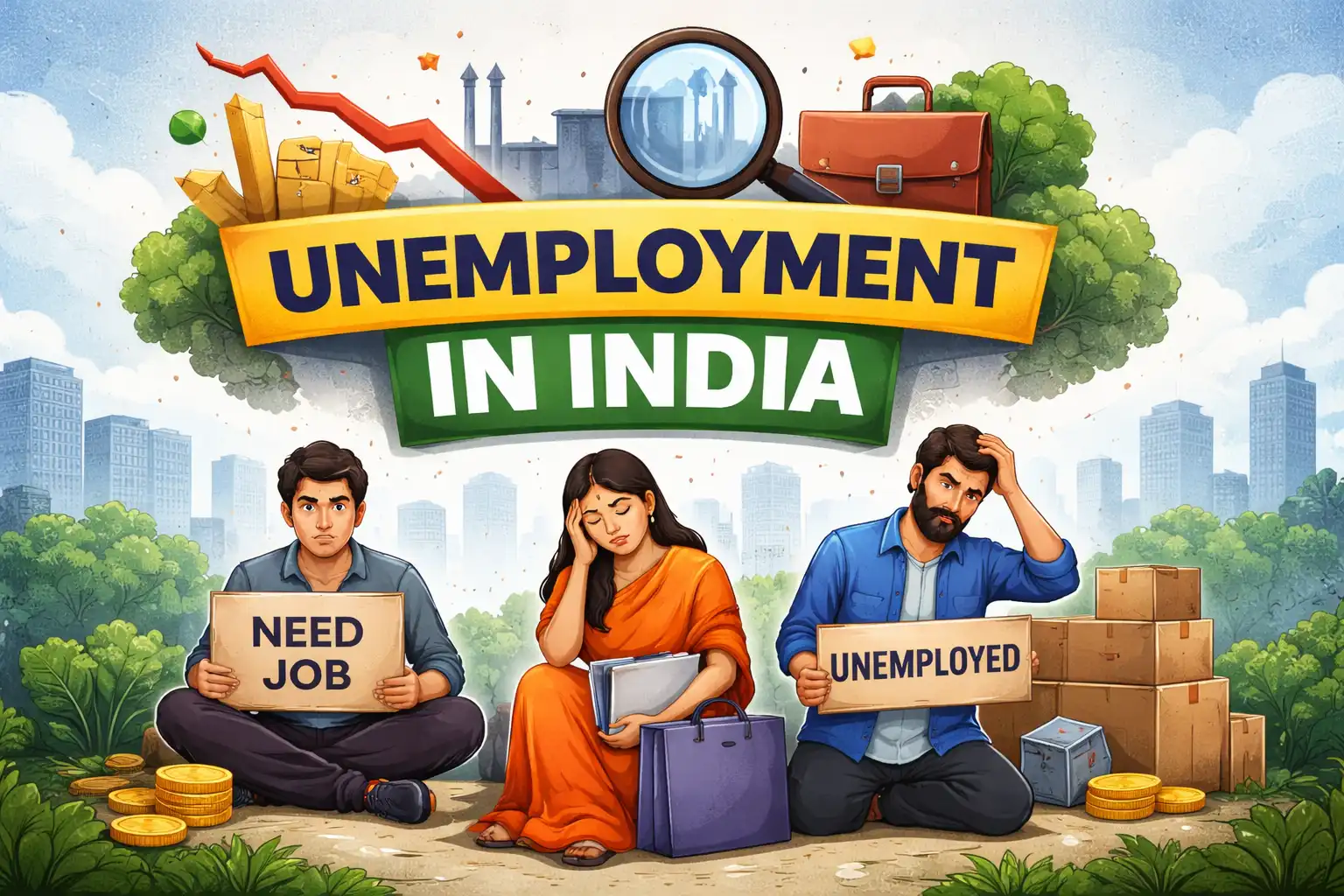
Unemployment is one of the most discussed socio-economic challenges in India. For a developing country with a large youth population, job creation is not just an economic necessity — it is a social priority.
In this blog post, we will understand the current unemployment rate in India, its major causes, economic and social impacts, and practical solutions for long-term improvement.
📊 What Is the Current Unemployment Rate in India?
As per recent official data released by the Government of India through the Periodic Labour Force Survey (PLFS), India’s unemployment rate is around 5% (approximately 5.1–5.2%) for individuals aged 15 years and above.
However, the overall number does not tell the complete story:
- Urban unemployment is generally higher than rural.
- Youth unemployment (especially 15–29 age group) is significantly higher.
- Female labour force participation remains comparatively low.
- Many workers are employed in the informal sector, where jobs lack stability and security.
So, while the percentage may appear moderate, the structural issues behind it are serious.
📌 What Is Unemployment?
Unemployment refers to a situation where:
A person who is willing and able to work at the prevailing wage rate is unable to find employment.
In India, unemployment appears in different forms:
- Open unemployment
- Disguised unemployment (common in agriculture)
- Seasonal unemployment
- Educated unemployment
- Underemployment
❗ Major Causes of Unemployment in India
1️⃣ Rapid Population Growth
India has a large and growing workforce. Job creation has not always matched the pace of new entrants into the labour market.
2️⃣ Skill Mismatch
Many graduates lack industry-relevant skills. There is often a gap between:
- What students learn
- What industries actually require
This creates educated unemployment.
3️⃣ Overdependence on Agriculture
A large portion of the population depends on agriculture, which is:
- Seasonal
- Low-income
- Limited in productivity
This leads to disguised unemployment.
4️⃣ Slow Growth in Labour-Intensive Industries
Sectors such as textiles, manufacturing, and MSMEs (Micro, Small and Medium Enterprises) have not expanded fast enough to absorb the growing workforce.
5️⃣ Informal Economy
A significant part of India’s workforce is employed in the informal sector:
- No job security
- Low wages
- No social protection
This leads to unstable employment conditions.
6️⃣ Technological Automation
With increasing automation and AI, certain low-skilled jobs are reducing, creating structural unemployment.
📉 Impacts of Unemployment
Unemployment affects not only individuals but the entire economy and society.
🔹 Economic Impacts
- Lower GDP Growth – Fewer working people means lower productivity.
- Reduced Consumer Demand – Less income means lower spending.
- Loss of Government Revenue – Lower tax collection.
- Waste of Human Resources – Educated youth remain unutilized.
🔹 Social Impacts
- Increase in poverty and inequality
- Mental health issues like stress and anxiety
- Rise in social unrest and crime (in extreme cases)
- Brain drain (migration of skilled youth abroad)
Unemployment also affects family stability and long-term financial planning.
✅ Practical Solutions to Reduce Unemployment
Solving unemployment requires structural reforms and long-term planning.
1️⃣ Skill Development & Education Reform
- Align education with industry needs.
- Promote vocational and technical training.
- Encourage soft skills and digital skills.
2️⃣ Promote Entrepreneurship
- Easier access to credit.
- Support for startups.
- Business mentorship and incubation.
When job seekers become job creators, employment multiplies.
3️⃣ Strengthen MSMEs
Small and medium enterprises generate large-scale employment. Government policies should:
- Reduce compliance burden
- Improve access to finance
- Encourage exports
4️⃣ Boost Labour-Intensive Industries
Focus on sectors like:
- Textiles
- Food processing
- Tourism
- Construction
- Manufacturing
These sectors can absorb semi-skilled workers at scale.
5️⃣ Improve Rural Employment
Develop:
- Rural infrastructure
- Agro-processing units
- Skill centers in villages
This will reduce migration pressure on cities.
6️⃣ Encourage Investment & Ease of Doing Business
A business-friendly environment attracts:
- Domestic investment
- Foreign Direct Investment (FDI)
More businesses mean more jobs.
🌱 Conclusion
Unemployment in India is not just about numbers; it reflects deeper structural and developmental challenges. While the overall unemployment rate is around 5%, youth unemployment and underemployment remain serious concerns.
India has a demographic advantage — a young population. If properly skilled and employed, this workforce can become a powerful driver of economic growth.
The key lies in:
- Education reform
- Skill development
- Entrepreneurship promotion
- Industrial expansion
- Policy stability
If these areas are strengthened, unemployment can gradually transform from a challenge into an opportunity for national growth.